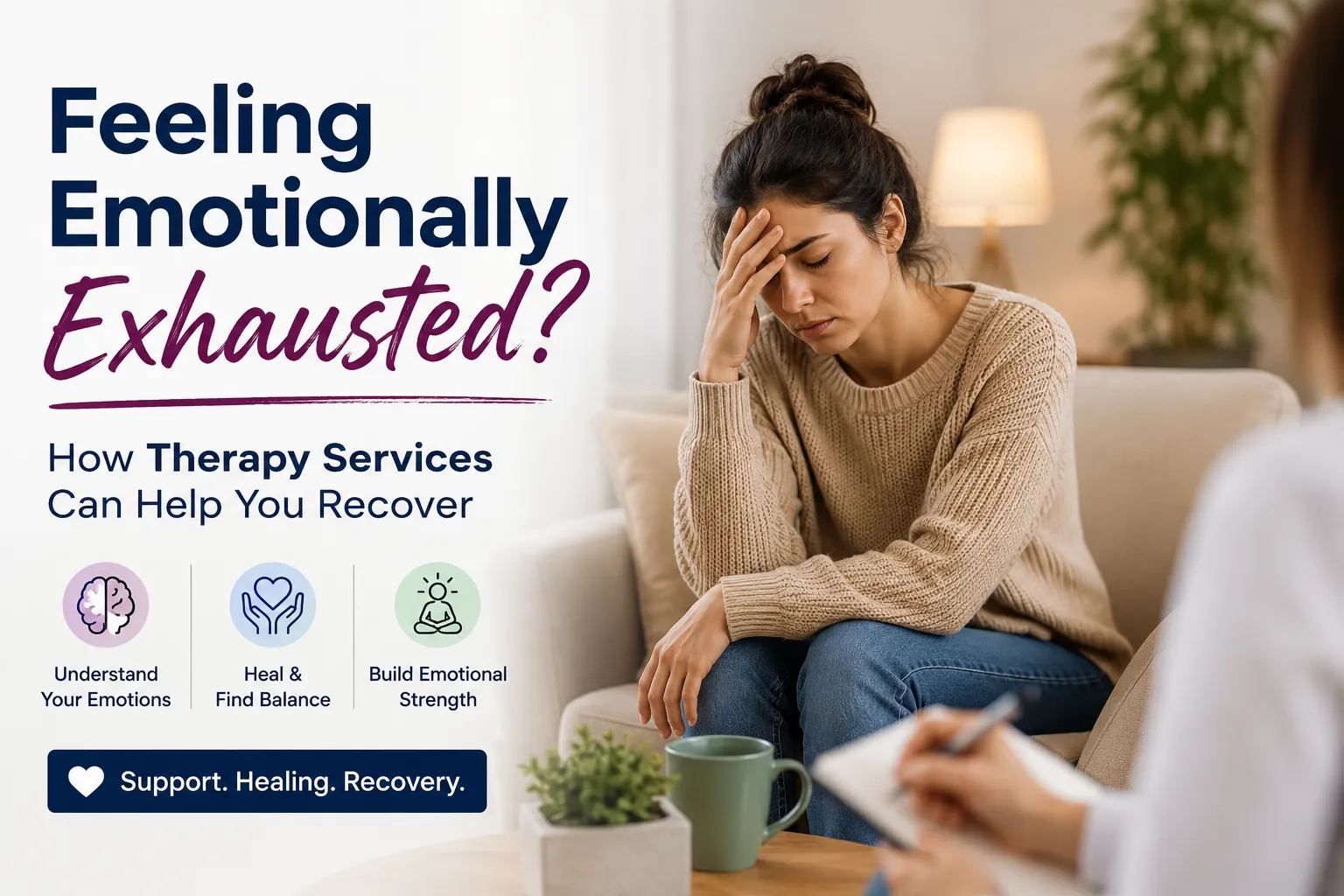
Emotional exhaustion is that point where everything still looks normal from outside, but inside… It feels like there is nothing left in the tank. No energy. No patience. No emotional space. Just a constant feeling of being drained for no clear reason.
And the worst part is this: life does not slow down just because signs of emotional exhaustion show up. So the mind keeps going… even when it has nothing left to give.
That is where people slowly start feeling lost in their own routine.
When Exhaustion Starts Showing Up in Daily Life
It does not come like a big warning. It comes quietly.
One day, it feels a bit harder to focus.
Then replying to people feels like effort.
Then even small tasks feel like a burden.
And slowly, emotional exhaustion starts running the whole system.
It often feels like:
- “I am tired but I don’t even know why”
- “Everything feels like too much now”
- “I just want to be left alone”
And even rest does not fix it anymore.
That is usually the moment emotional exhaustion is already deep inside.
The Emotional Healing Build Nobody Really Notices
The mind does not crash in one day. It gets worn down.
- A busy week turns into a busy month.
- Stress becomes normal.
- Breaks become rare.
- Emotions keep getting pushed aside.
And without realizing it, emotional exhaustion builds layer by layer.
It is like carrying a bag… adding weight every day… but never putting it down.
At some point, even standing still feels heavy that is not good for Emotional Well-Being.
The Early Signs that Usually Get ignored
Most people miss the beginning completely.
Because emotional burn out does not start loudly. It starts softly.
Some early signs look like:
- Waking up tired even after sleeping
- Feeling mentally slow or foggy
- Not enjoying things that used to feel normal
- Getting irritated over small things
- Feeling emotionally “blank” or disconnected
And the common response is usually:
“It’s just stress.”
But exhaustion is already quietly building in the background.
When Exhaustion Starts Changing Everything
After a while, it is not just tiredness anymore.
It starts changing how life feels.
- Even normal conversations feel like effort.
- Work feels heavier than usual.
- Free time does not feel refreshing anymore.
And slowly, exhaustion starts affecting identity itself.
It often turns into thoughts like:
- “I don’t feel like myself anymore”
- “Everything feels like effort now”
- “I am just going through the motions”
That is the mind asking for help, not more pressure.
Why Therapy Becomes Important At This Stage
At this point, just resting more is usually not enough.
Because emotional exhaustion is not only physical tiredness. It is emotional overload that has been stored for too long.
Professional therapy services become the place where that overload finally gets space to come out.
No judgment. No pressure. Just unloading.
Anxiety Therapy and The Overthinking Loop
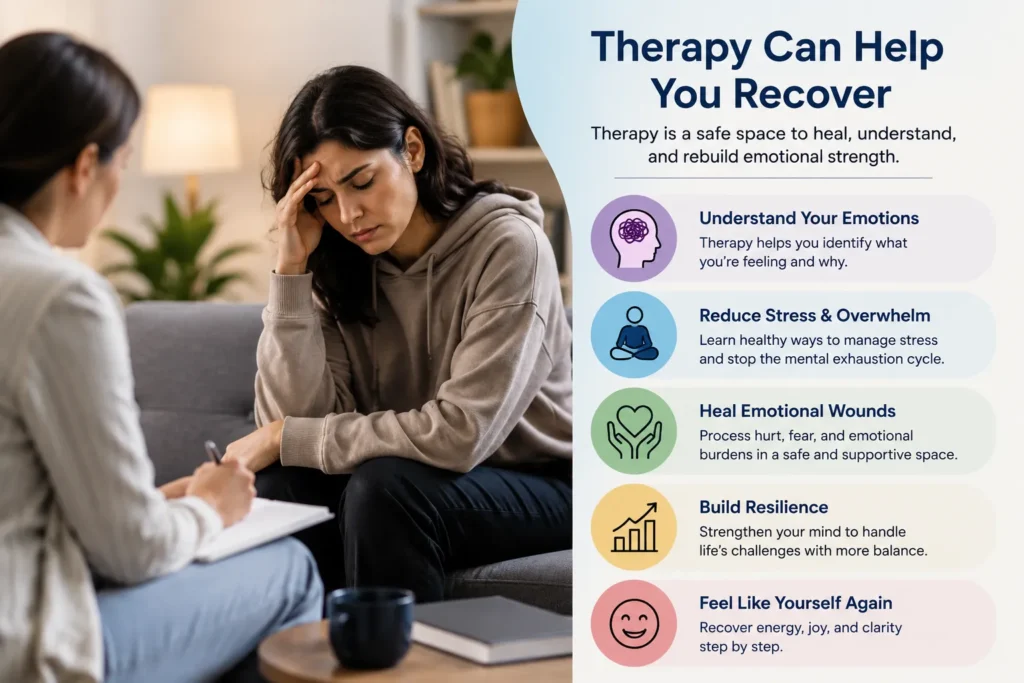
When the mind keeps running in circles, it never gets real rest. Anxiety Therapy helps slow that constant mental noise. It breaks the loop of overthinking that keeps feeding emotional exhaustion again and again. It helps the mind stop staying in “always alert” mode.
Mental Health Therapy and Emotional Overload
Comprehensive mental health services help make sense of what feels messy inside and support long-term emotional recovery.
Because emotional exhaustion usually comes with:
- Unprocessed emotions
- Hidden stress
- Mental overload that has no outlet
Therapy slowly helps sort that out, piece by piece, so everything does not feel like too much at once.
Depression Counseling and Emotional Shutdown
Sometimes emotional exhaustion goes deeper and emotions start feeling blocked.
Not sadness. Not happiness. Just… nothing.
Depression Counseling helps gently bring emotional feeling back again. Slowly. Naturally. Without forcing anything.
It helps the mind reconnect with itself again.
What Recovery Actually Feels Like (real life version)
Recovery from emotional exhaustion is not a big “before and after” moment.
It is slow. Almost unnoticeable at first.
One day feels slightly lighter.
Another day feels a bit clearer.
Then small things start feeling okay again.
And slowly:
- Energy starts coming back in small amounts
- Thinking feels less heavy
- Emotions start feeling normal again
That is exhaustion lifting step by step.
Not suddenly. Not magically. But steadily.
Small Everyday Changes that Actually Help
Recovery does not need big life changes.
Small things matter more.
Like:
- Stopping the habit of pushing through everything
- Taking breaks before reaching burnout
- Giving the mind space to just “be”
- Talking instead of holding everything inside
- Reducing unnecessary pressure from daily routine
These small shifts slowly reduce exhaustion over time.
Not overnight… but real progress.
Why Exhaustion Keeps Coming Back If Ignored
If nothing changes, exhaustion does not really end. It just repeats.
Same cycle again and again:
Stress builds → no proper recovery → more stress → emotional drain
So prevention becomes very important:
- Noticing early signs instead of ignoring them
- Slowing down before reaching breaking point
- Not treating constant stress as normal
- Protecting mental energy like physical energy
Because exhaustion always grows where rest is missing.
Conclusion:
Emotional exhaustion is not laziness. Not a weakness. Not overthinking.
It is simply the mind saying:
“I have been carrying too much for too long.”
And the good part is this: the mind can recover.
With the right support like Anxiety Therapy, Mental Health Therapy, and Depression Counseling, exhaustion slowly starts to fade… and emotional strength comes back again.
Not fast. Not forced. But real.
Frequently Asked Questions
What is exhaustion?
Exhaustion is when the mind feels completely drained after too much stress or pressure, where even simple daily things start feeling heavy and tiring inside.
How does emotional exhaustion usually start without people noticing?
It usually starts slowly with small stress, lack of proper rest, and emotional pressure that keeps building until the mind stops feeling refreshed.
What does exhaustion feel like day to day?
It feels like constant tiredness, low motivation, mental fog, emotional numbness, and everything feeling like effort even when nothing big is happening.
Why does exhaustion make simple things feel hard?
Because emotional energy is low, so the brain struggles to process normal tasks and even small responsibilities feel overwhelming.
Can exhaustion affect behavior and mood?
Yes, exhaustion can make someone more irritated, less patient, emotionally distant, and less connected to normal life.
How does therapy actually help exhaustion?
Therapy helps reduce mental pressure, release stored emotions, and slowly rebuild emotional energy so the mind can recover properly.
Is exhaustion the same as stress?
No. Stress is usually temporary, but emotional exhaustion is deeper and lasts longer because the emotional system becomes overloaded.
What is the first step to recover from exhaustion?
The first step is slowing down, reducing pressure, and allowing the mind space to rest instead of pushing harder.
How long does exhaustion recovery take?
It depends on the level, but with support, emotional exhaustion can start improving in a few weeks and continue improving gradually over time after burnout recovery.
What should be avoided when feeling emotionally exhausted?
Avoid overworking, ignoring rest, emotional suppression, and pushing through constantly because these make exhaustion worse.
