A friend is worried about someone. A family member says a relative seems different. The person has pulled away from everyone. Ignoring the signs is not an option anymore. That is why more people are scheduling a psychiatric consultation.
The idea sounds simple. Talk to a doctor about mental health. But when people start searching, things get confusing. One website talks about medication. Another talks about therapy. Another says to just wait. Meanwhile, the person keeps struggling.
What Is a Psychiatric Consultation?
Think about going to the doctor for physical stuff. A cough that just won’t go away. A pain in your back. A fever that keeps coming back. Mental health works the exact same way.
A psychiatric consultation is just a visit to a medical doctor who specializes in mental health. You talk about what you’re going through. The doctor listens — no judgment, no rush. And together, you figure out what’s really going on.
That’s why more and more people are paying attention to it.
Why Are People Finally Seeking Help?
Mental health struggles used to stay hidden. Mental health struggles were often kept hidden, support was rarely sought, and countless individuals endured their pain in silence for years.
That has changed. People admit they feel overwhelmed. People talk about their anxiety. Families discuss mental health openly. Workplaces now offer support. A psychiatric consultation fits how people approach health today.
People seek help because they want relief from constant sadness. Many people hope for better sleep, increased energy, healthier relationships, reduced stress, and, above all, the chance to feel better every day.
1. Start With One Simple Question
How long has this been going on? Many people skip this step. Feeling down for a few days usually passes. Feeling down for weeks suggests something different. A psychiatric consultation works best when someone stops delaying.
Many people put off help because they think things will improve. Weeks later symptoms have worsened. Paying attention to warning signs matters.
2. Do Not Ignore the Signs
People push through the pain. Behind a smile, they continue working, fulfill everyday responsibilities, and hide the fact that they are quietly struggling.
The question is not what can I handle. The question is what signs should I pay attention to.
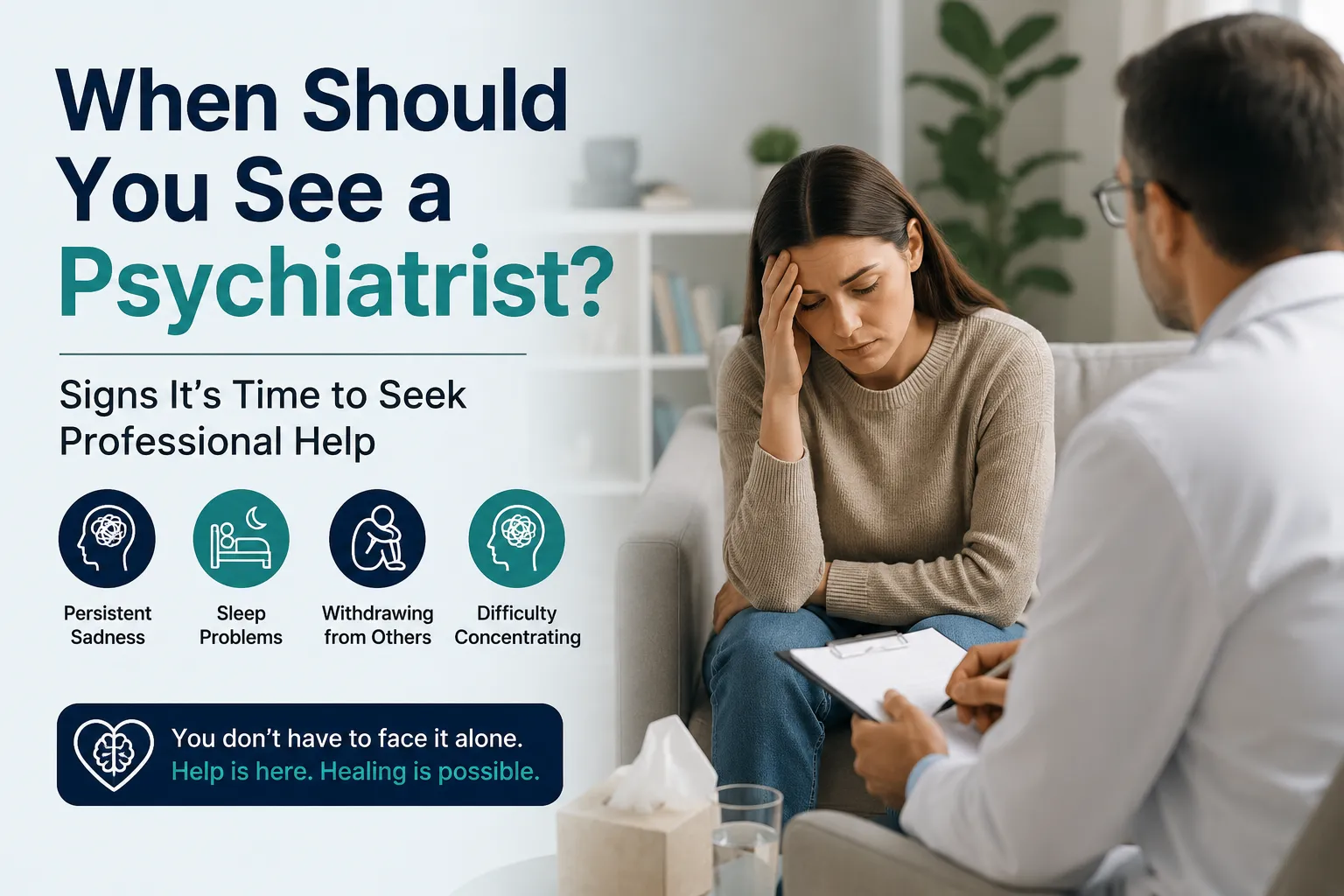
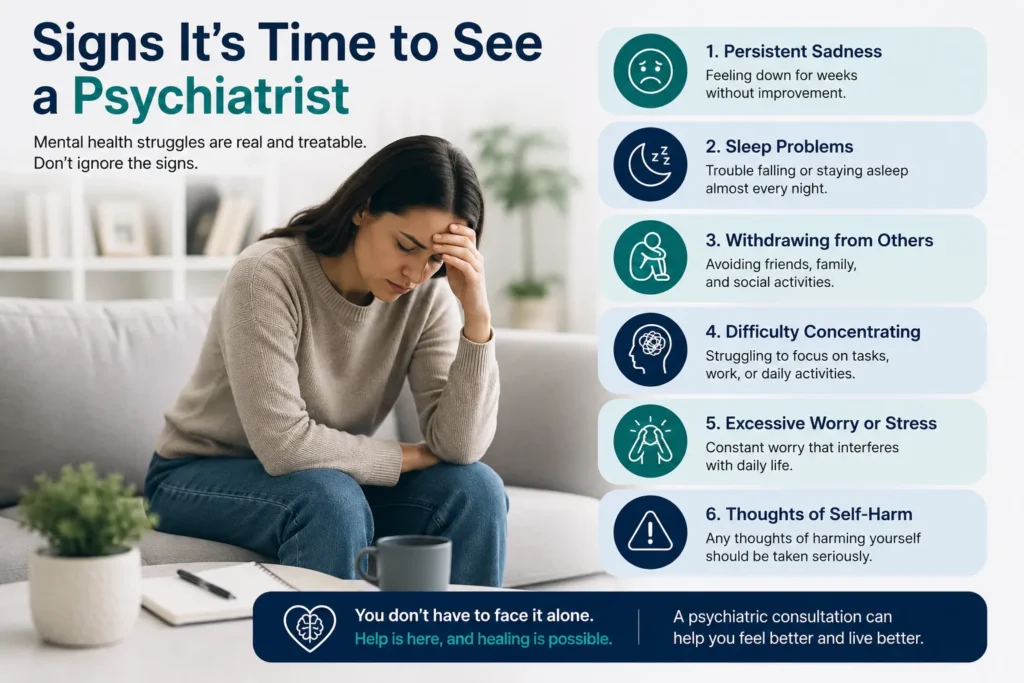
Persistent sadness, sleepless nights, withdrawing from loved ones, and difficulty concentrating can all be signs that professional mental health support may be needed. Signs you need a psychiatrist include persistent sadness that will not lift. Excessive worry that takes over everything. Sleep problems that never fix themselves. Social withdrawal from friends and family. Difficulty with daily tasks. Using substances to cope. Unexplained physical symptoms. And most urgently, thoughts of self-harm.
If someone experiences these signs regularly, they matter. If symptoms persist week after week, professional help becomes necessary.
3. Think About Your Typical Day
Morning comes and waking up feels exhausting. Work feels overwhelming. Conversations feel draining. Simple tasks feel impossible. Instead of pushing through alone, a psychiatric consultation could change everything. A person talks to someone who understands. A doctor listens without judgment.
A treatment plan develops based on individual needs. That is where modern mental health care makes a difference.
4. How Long Has This Been Going On?
Nobody likes talking about how long they have struggled. But it matters. Lingering symptoms mean persistent sadness that will not go away. Constant worry that never stops. Disrupted sleep every night. Strained relationships with everyone close to them.
Before choosing a psychiatric consultation, check how long symptoms have lasted. Even the best self-care cannot fix problems that require professional help.
5. When Should You Stop Waiting?
Years ago people avoided mental health care. Stigma kept them away. Fear stopped them from reaching out. They did not know what to expect.
Today many people book an appointment. The psychiatrist talks with them. The person shares their struggles. Help finally begins. A psychiatrist appointment removes uncertainty and fear. Less waiting means less suffering.
6. What Happens When You Keep Waiting?
Things do not improve on their own. The sadness gets deeper. The worry grows stronger. Relationships suffer more. Work becomes harder. Symptoms continue to worsen.
This is why timing matters. Before deciding to wait longer, ask whether things will really get better. What if they get worse instead. What is the real cost of delaying.
Good support becomes essential the moment someone realizes they need it.
7. What Will You Really Pay by Delaying?
The cheapest option rarely tells the full story. There may be lost relationships. Missed opportunities. Declining health. Greater suffering that could have been avoided.
A timely psychiatric evaluation is not always the most expensive choice. Getting help sooner gives better results and fewer problems overall.
8. Can You Get Help Without Medication?
Many individuals hesitate to take medication because of possible side effects or a desire to explore therapy and other treatment options first. A psychiatric consultation offers various treatment paths.
Recovery looks different for everyone, with treatment options ranging from therapy and lifestyle improvements to medication or a carefully tailored combination of all three. The treatment plan depends on individual needs.
9. Will the Right Psychiatrist Work With You?
Every psychiatrist has their own style. Every patient has their own needs. A proper psychiatric consultation includes a thorough evaluation. Accurate diagnosis. Clear explanations. Personalized treatment. Ongoing monitoring. Open communication.
Finding the right person takes time. Taking extra time to find a good match pays off.
10. What Happens When You Get Help?
Better mental health means fewer difficult days. Stronger relationships. Improved sleep. More energy. Clearer thinking. Greater satisfaction with life.
That is why people continue scheduling psychiatric services for mental health.
Conclusion
Choosing a psychiatric consultation is not about illness. Quality mental health care focuses on improving emotional well-being, connecting individuals with professional support, enhancing daily life, and reducing ongoing mental health challenges.
The right psychiatric evaluation quietly does its job. Symptoms improve over time. People start feeling better. Relationships grow stronger. Life moves forward in a positive direction. That is what every person truly wants.
Frequently Asked Questions
What is a psychiatric consultation?
A visit with a medical doctor who specializes in mental health. The doctor listens, asks questions, and figures out what is going on. More thorough than seeing a regular doctor.
How do I know when to see a psychiatrist?
When sadness, worry, or stress lasts for weeks and affects work, sleep, or relationships. If daily life feels harder than it should, that is a clear sign.
What happens during a psychiatrist appointment?
The doctor asks about symptoms, medical history, sleep, appetite, and daily struggles. They may order lab work. Then they create a treatment plan.
What are the signs you need a psychiatrist?
Feeling down for weeks, worrying constantly, sleeping poorly, pulling away from people, struggling with daily tasks, using substances to cope. These are clear signs.
What does a psychiatric evaluation include?
Current symptoms, medical history, family history, lifestyle factors, and sometimes physical tests. It shows the whole picture for proper treatment.
Do I need a referral for a psychiatric consultation?
Some insurance plans need a referral, but many psychiatrists accept self-referrals. You can book directly without seeing another doctor first.
Can a psychiatrist help without medication?
Yes. Psychiatrists offer therapy, lifestyle advice, stress management, and other approaches during a psychiatric consultation. Medication is just one option.
How long does a psychiatric consultation take?
The first one’s the longest — about 45 to 90 minutes. They gotta get the full picture. After that, follow-ups are shorter, like 15 to 30 minutes, just to check in on how you’re doing.
How do I find psychiatric services for mental health?
Start with your insurance provider’s list. Ask your primary care doctor for a referral. Check out online reviews. Or ask people you trust if they know someone good. Word of mouth goes a long way.
What if I am nervous about my first psychiatrist appointment?
Totally normal. Most people are. Just bring a list of questions. Write down your symptoms so you don’t forget anything. And remember, the doctor’s there to help, not judge.
