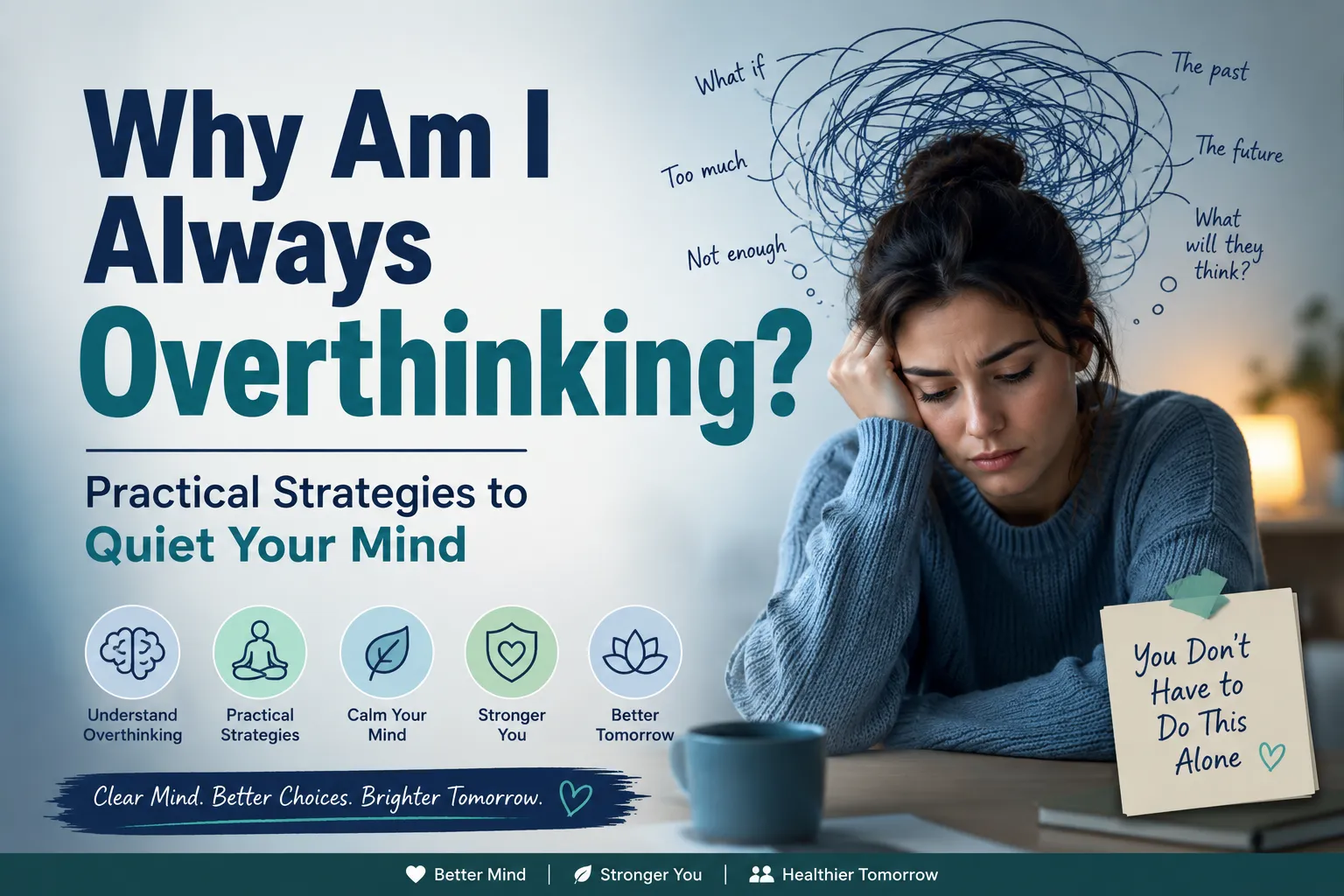
You are turning the problem over in your head, running through every possible scenario, trying to get it just right. But it is not productive. It is actually the opposite.
Therapy for overthinking is not the endless cycle of replaying the same thoughts without making progress. It keeps you stuck. It drains your mental energy. And it never solves the problem.
If you have ever asked yourself “why am I always overthinking” or stayed up at night with racing thoughts, the answer is usually straightforward. It is a habit. A pattern your brain has learned to quiet your mind. And like any habit, you can learn to break it.
What Overthinking Symptoms Actually Is
Overthinking comes in two flavors.
Ruminating. Dwelling on the past. Replaying conversations, wondering what you should have said, agonizing over small mistakes you made months ago.
Worrying. Fixating on the future. Imagining worst-case scenarios, projecting outcomes that have not happened yet, feeling dread about things that might never come.
Neither is helpful. Neither changes reality. Both keep your brain stuck in a loop.
Overthinking doesn’t just stay in your head, it shows up in your body too. Restlessness. Tension headaches. Trouble sleeping. Stomach issues. Fatigue. All common. If you’re dealing with that along with the constant mental chatter, your body’s waving a red flag. It’s telling you to get some help for therapy for overthinking.
Why You Overthink
The causes of overthinking are often rooted in fear and uncertainty. Trying to gain control over situations that cannot be controlled often leads to overthinking. Predicting outcomes before they happen creates unnecessary worry. Attempting to prevent every possible failure only fuels the cycle of anxious thoughts.
Perfectionism can drive overthinking by creating the belief that everything must be done exactly right. Anxiety may also play a role, causing the brain to anticipate and avoid every possible threat. In other cases, overthinking develops as a learned habit shaped by childhood experiences or past events.
The root cause varies from person to person. The way out is usually the same for everyone.
Signs Overthinking Has Become a Problem
You might recognize some of these signs before going to therapy for overthinking:
– You spend hours analyzing a simple decision .
– You struggle to make decisions without checking with others first .
– You replay conversations in your head for days .
– You have trouble falling asleep because your mind will not turn off .
– You struggle to focus on anything else when you are worried about something .
– You ask others for reassurance repeatedly .
How to Stop Overthinking
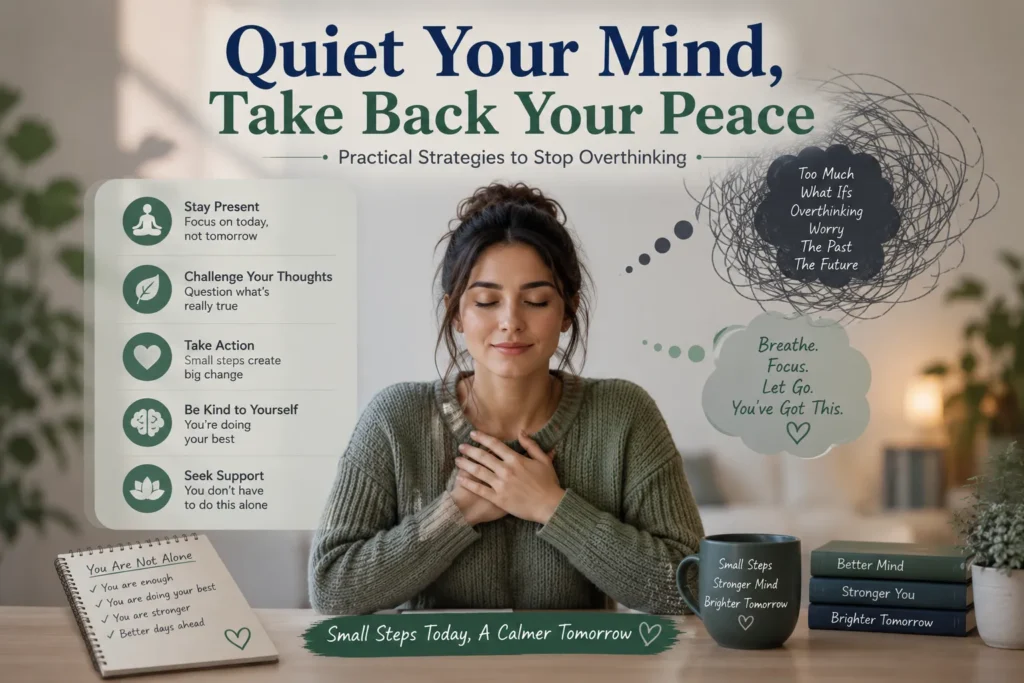
Here are practical strategies to break the cycle.
- Stop Replaying Conversations
You cannot control how others perceive you. You cannot change what they think. Replaying conversations does not change their opinion. It only creates more anxiety.
- Practice Mindfulness
Mindfulness is about staying right here, right now, not rehashing the past or freaking out about tomorrow. Try focusing on your breath. Or just notice your thoughts without judging them. That alone can break the cycle.
- Talk to Someone
Get it off your chest with a friend or partner. But watch out, don’t drag each other deeper into worry. If overthinking keeps hanging around, a pro can help you get to the real root of it.
- Accept Imperfection
Good is usually good enough. Perfect? Not required, and honestly, not possible. Cut yourself some slack. It’s not about settling but it’s about accepting you’re human and worthy no matter the outcome.
- Stay Active
Moving your body is one of the best ways to blow off steam. It gives your mind a break and lets tension out. Doesn’t have to be crazy, a walk, some yoga, even stretching can reset your brain.
- Limit Information Overload
Rumination and worry? A lot of it comes from too much information. An endless stream of news, constant social media updates, and nonstop noise throughout the day can easily overwhelm your mind. Give yourself permission to check out. Opt out of certain conversations. Turn off the alerts. Shut the door on all that noise.
When to Consider Professional Help
Look, if you’ve tried all this stuff and you’re still stuck? Might be time to talk to a therapy for overthinking. Someone who can help you figure out what’s really going on and give you tools that actually fit your situation.
Cognitive-behavioral therapy is great for this. It teaches you to catch those thought patterns that keep you spinning and replace them with something better. It’s not about pretending problems don’t exist — it’s about seeing them clearly. Therapy for overthinking doesn’t drain your energy or make everything feel heavier. It actually does the opposite.
Frequently Asked Questions
What’s the root cause of overthinking?
Fear. Uncertainty. Perfectionism. Anxiety. Your brain thinks it’s helping by analyzing everything to death, but it just keeps you stuck in a loop that goes nowhere.
Why does my brain overthink every little thing?
It probably became a habit to keep you safe from mistakes. Eventually, it just became your default setting, even when there’s nothing to be scared of.
What are the physical symptoms of overthinking?
Headaches. Restlessness. Can’t sleep. Stomach issues. Feeling drained all the time. If you’ve got that plus nonstop mental chatter, your body’s waving a red flag.
Is overthinking a mental health condition?
Not by itself. But it’s a big sign of anxiety or depression. If it’s taking over your life, don’t brush it off, talk to someone who can actually help.
Can overthinking be cured?
You don’t really cure it but you learn to handle it. With the right tools, you can break that loop and start thinking clearer.
How do I know if I’m overthinking or problem-solving?
Problem-solving moves you forward — you get closer to a decision or a plan. Overthinking? That just goes in circles. If you’re not making progress, you’re just spinning your wheels.
Is therapy effective for overthinking?
Yeah, it really is. Cognitive-behavioral therapy especially, it helps you catch those unhelpful patterns for healthier ones.
What’s the difference between overthinking and racing thoughts?
Overthinking is obsessing over one thing. Racing thoughts are all over the place, jumping from topic to topic fast.
Can overthinking cause physical health problems?
Chronic overthinking can mess you up with headaches, stomach issues, no sleep, even a weaker immune system from all that stress.
