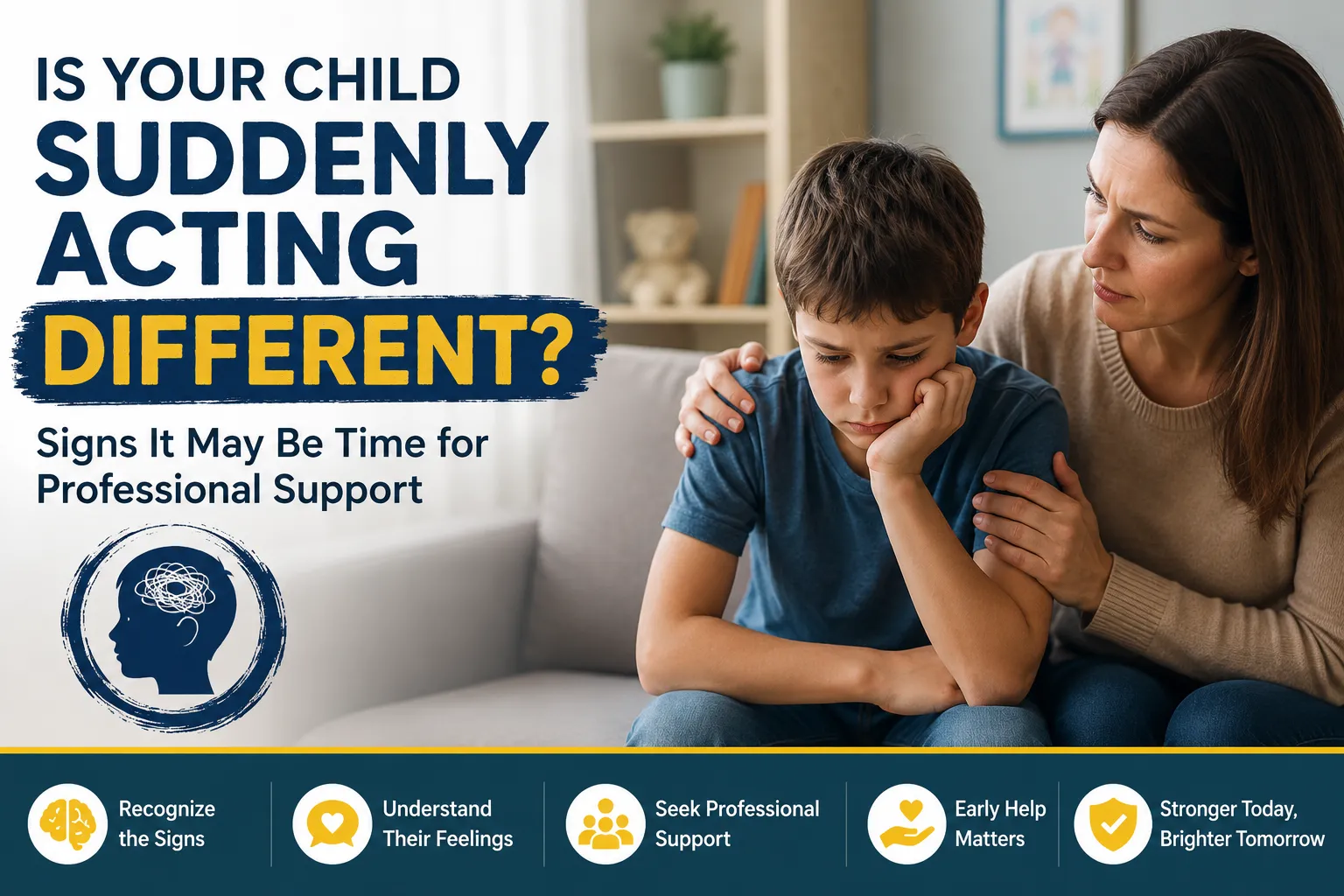
Kids change. That is part of growing up. One day they are fine, the next they are moody or withdrawn. Some days it is just a phase. Other days something deeper is going on.
The first thing to understand is that signs your child needs counseling are not always obvious. And that is exactly why parents need to know what to look for.
When to Trust Your Gut
Here is something pediatrician and child psychologists agree on. Trust your instincts when something feels off.
You know your child best. If the quiet kid suddenly becomes withdrawn or the easy-going child is constantly irritable, do not dismiss it as nothing. Listening to that nagging feeling is the signs your child needs counseling.
Red Flags That Warrant Attention
Some behaviors are common in children. Others are not. The difference is how long they last and how severe they become.
Signs your child needs counseling often show up in multiple areas. A child acting up at home, struggling in school, and fighting with friends is dealing with something real.
Here are warning signs from experts at the Cleveland Clinic and the CDC :
- Sleep or appetite changes: Extra sleepy, barely eating, or suddenly ravenous. Depends on their age, but big shifts in habits could signal mental health struggles.
- Withdrawal from people and activities: The child who loved soccer now wants to stay in their room. They avoid friends and family. They stop caring about things they used to enjoy.
- Excessive worry that is hard to control: Nerves before a test is normal. Frequent, intense worry that causes physical symptoms or gets in the way of daily life is not.
- Frequent physical complaints: Headaches, stomachaches, chest pain, and fatigue with no clear medical cause. Children often experience stress through their bodies.
- Persistent sadness or hopelessness: Feeling down for more than two weeks straight. Statements like “I wish I weren’t here” or “Nobody would care if I ran away” demand immediate attention.
- Self-harm or risky behaviors: Cutting, misusing substances, or deliberately hurting themselves.
- Big changes in school performance: Slipping grades. Refusing to go to school. Trouble concentrating. School is work for kids. When work suffers, something is usually going on
- Anger or defiance that is not normal: Frequent arguments with adults or peers. Blaming others, being deliberately annoying, or quick-to-temper reactions that lead to fighting or bullying.
The CDC notes that children with these behaviors more often than other kids their age are showing signs of a behavior disorder. Not because they are bad. Because they are struggling.
What Gets Mistaken for Normal
Some behaviors that worry parents are actually normal parts of growing up.
Young kids bang their heads and rock back and forth. It looks frightening but is common and they outgrow it. Toddlers have tantrums. Teens push boundaries. These are not necessarily signs your child needs counseling.
The difference is intensity, frequency, and impact on daily life. Does the behavior happen constantly? Is it causing problems at school, at home, or with friends? If yes, it is worth investigating.
What Does a Child Therapist Actually Do
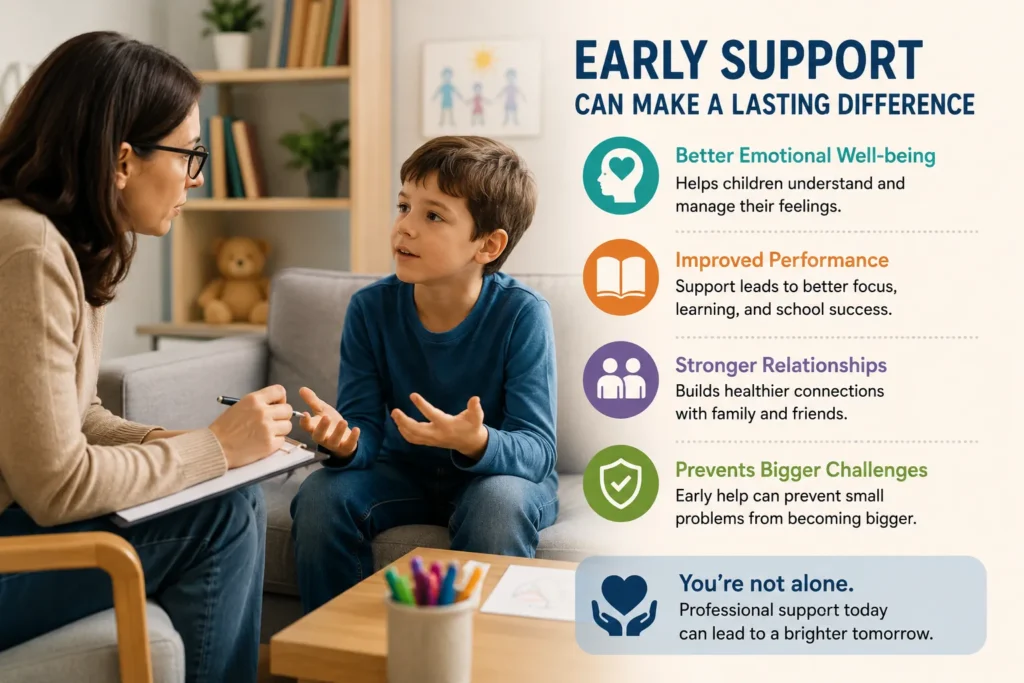
What does a child therapist do is a common question. They do not sit kids down for a “tell me about your childhood” session.
Therapy with children usually involves play, activities, and talking. It helps them understand feelings, develop coping strategies, and manage difficult emotions.
Child counseling services often involve parents directly. Depending on a child’s symptoms, therapy services can help improve emotional regulation, coping skills, and overall mental well-being.
Child mental health support can include different approaches. Behavioral therapy helps strengthen positive behaviors. Cognitive behavioral therapy (CBT) helps kids identify and change unhelpful thought patterns.
Getting Professional Support
If you notice these signs, what do you do?
Start with the pediatrician. A pediatric behavioral health professional can rule out physical causes and make referrals. Screening for mental, emotional, and behavioral problems is now standard in many well-child visits.
Talk to other adults who know your child. Teachers, coaches, and relatives may have noticed things you have not. Other perspectives help are signs your child needs counseling.
Look for a therapist trained in child mental health. In some cases, a child psychiatrist may be recommended to evaluate more complex emotional or behavioral concerns, while psychologists focus primarily on therapy. Licensed clinical social workers often provide therapy.
The most research-supported approaches include behavioral therapy, cognitive behavioral therapy, and parent-child interaction therapy (PCIT). These are structured and evidence-based signs your child needs counseling.
Conclusion
Signs your child needs counseling can feel scary. But the earlier support starts, the better the outcome. About 13% to 20% of children experience a mental health disorder, and most adult mental health conditions begin in childhood . Early treatment helps children at home, in school, and in relationships.
Do not wait until things get worse. Trust your instincts. Talk to a professional. Give your child the support they deserve.
Frequently Asked Questions
What are the signs your child needs counseling?
Big changes in sleep or appetite, withdrawal from activities and people, excessive worry, persistent sadness, dropping grades, unexplained physical complaints, anger or defiance that is persistent, and any talk of self-harm or suicide.
What does a child therapist do during sessions?
A child therapist uses talk, play, and activities to help kids express feelings, learn coping strategies, and manage difficult emotions. For young children, they often work with parents directly.
Does my child need therapy or just a phase?
The difference is how long it lasts and how severe it is. If behaviors last more than two weeks, affect daily functioning, or cause significant distress, it is time to seek professional help.
How do I find child counseling services?
Start with your child’s pediatrician or primary care provider. They can rule out physical causes and provide referrals. You can also check your insurance provider’s directory for mental health specialists.
What is the difference between a psychologist and psychiatrist for children?
A psychologist provides therapy. A psychiatrist can prescribe medication. Both can evaluate your child. Your pediatrician can help you decide which is appropriate.
What is cognitive behavioral therapy for children?
CBT helps children identify unhelpful thought patterns and change them. It is one of the most research-supported treatments for anxiety, depression, and behavior problems in children.
How long should I wait before seeking professional help?
Do not wait if your child is struggling. Early intervention leads to better outcomes. If your gut says something is wrong, trust it and talk to a professional and see signs your child needs counseling.
Can I do therapy for my child without the child being aware?
For young children, parent training is common. The therapist works with parents alone to teach strategies to improve behavior. For older children, they usually participate directly.
Is child therapy covered by insurance?
Most insurance plans cover mental health services, including child therapy. Check your specific plan for coverage details and provider networks.
What if my child refuses to go to therapy?
This is common, especially with teens. Start by talking to your child about why you are concerned and normalizing help-seeking as a signs your child needs counseling. A pediatrician or school counselor can also help explain the benefits.
