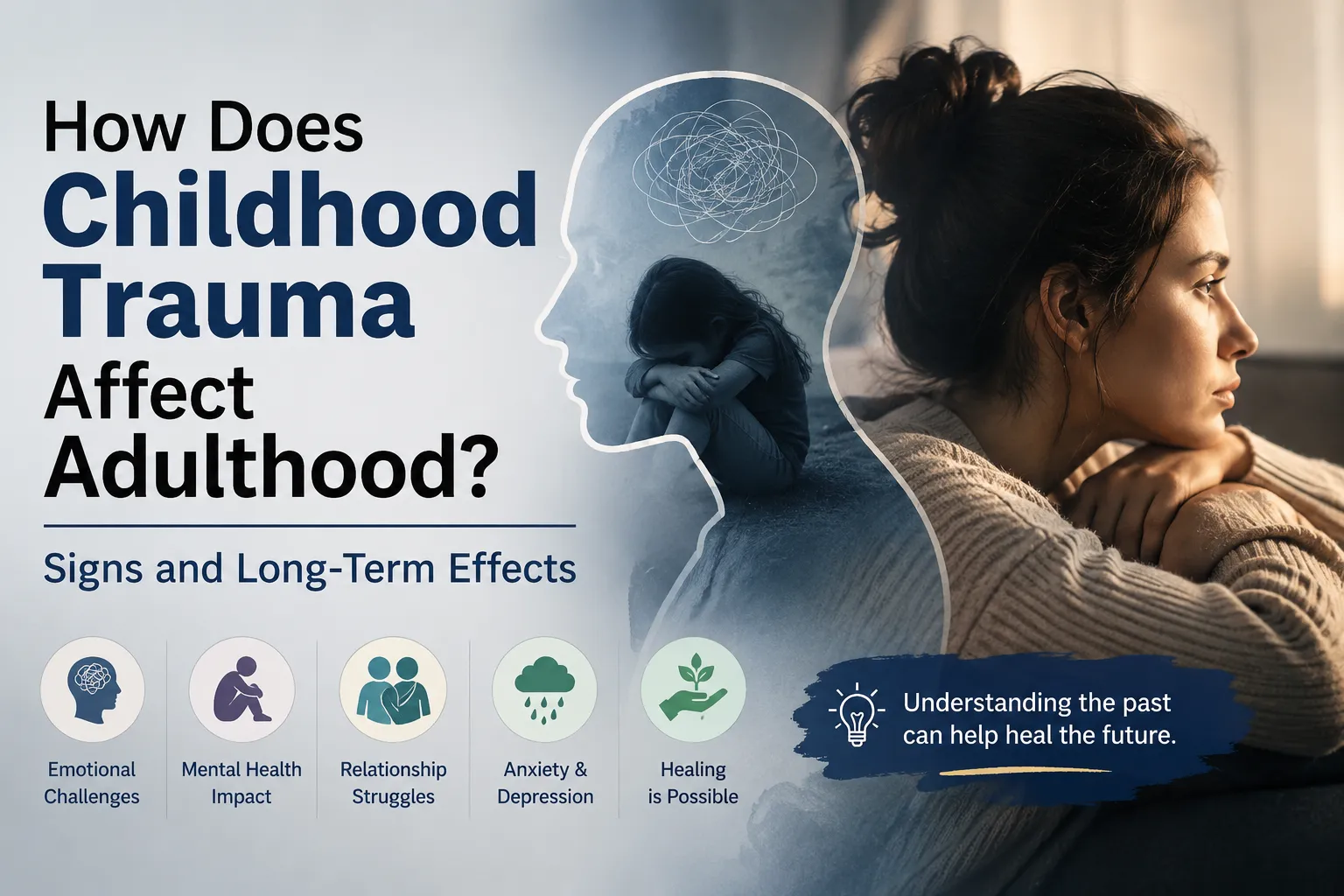
he issue is not limited to childhood trauma. The fact is that childhood affects adulthood in everyone.
It is common to refer to childhood as the “formative years.” That term is used for very good and critically important reasons. Newborns enter a system about which they know nothing. Their task, especially for the first few years of life, is to figure out the system, so they can function in it. At least, they need to get their needs met, and stay out of trouble. They also have to figure out how to get along with others.
Newborns are entirely dependent and helpless. They can’t feed themselves, clean themselves, go anywhere without being taken by someone else, communicate, or understand communication from others. It is during those “formative years,” which gradually resolve over about one to about seven years, that they learn the skills that will allow them to manage increasingly for themselves. During these formative years, two main factors are developing: interpersonal habits and emotional reflexes. They learn how to interact with others, communicate, respond to relationships, and develop patterns of behavior toward the people around them. At the same time, they develop emotional reflexes, learning how to respond to comfort, fear, rejection, approval, conflict, and other experiences. And they continue to learn more sophisticated skills over the next several years.
A critically important dynamic that allows children, and especially the younger ones, to learn what they have to know is that they normalize their formative years. What happens during those years is accepted as normal: the way things are, and the way things ought to be. This becomes deeply ingrained, so that most people repeat their formative years into and throughout adulthood. When formative years are stable and supportive, children, and later adults, become stable, and seek supportive environments and connections. They do that unconsciously, because it is what they have long accepted as normal. When the formative years are not stable and supportive, or perhaps distorted by one or another maladaptive dynamic, children, and later those same people as adults, will unconsciously look to recreate even these maladaptive dynamics. They’re what they know. They’re what they’ve adapted to. They’re…normal.
Various situations can distort what might otherwise be adaptive upbringings and adaptations. Those would be things like superimposed and unrelated diagnoses, or something like trauma. Those kinds of conditions get addressed or treated in various ways, depending on the condition.
