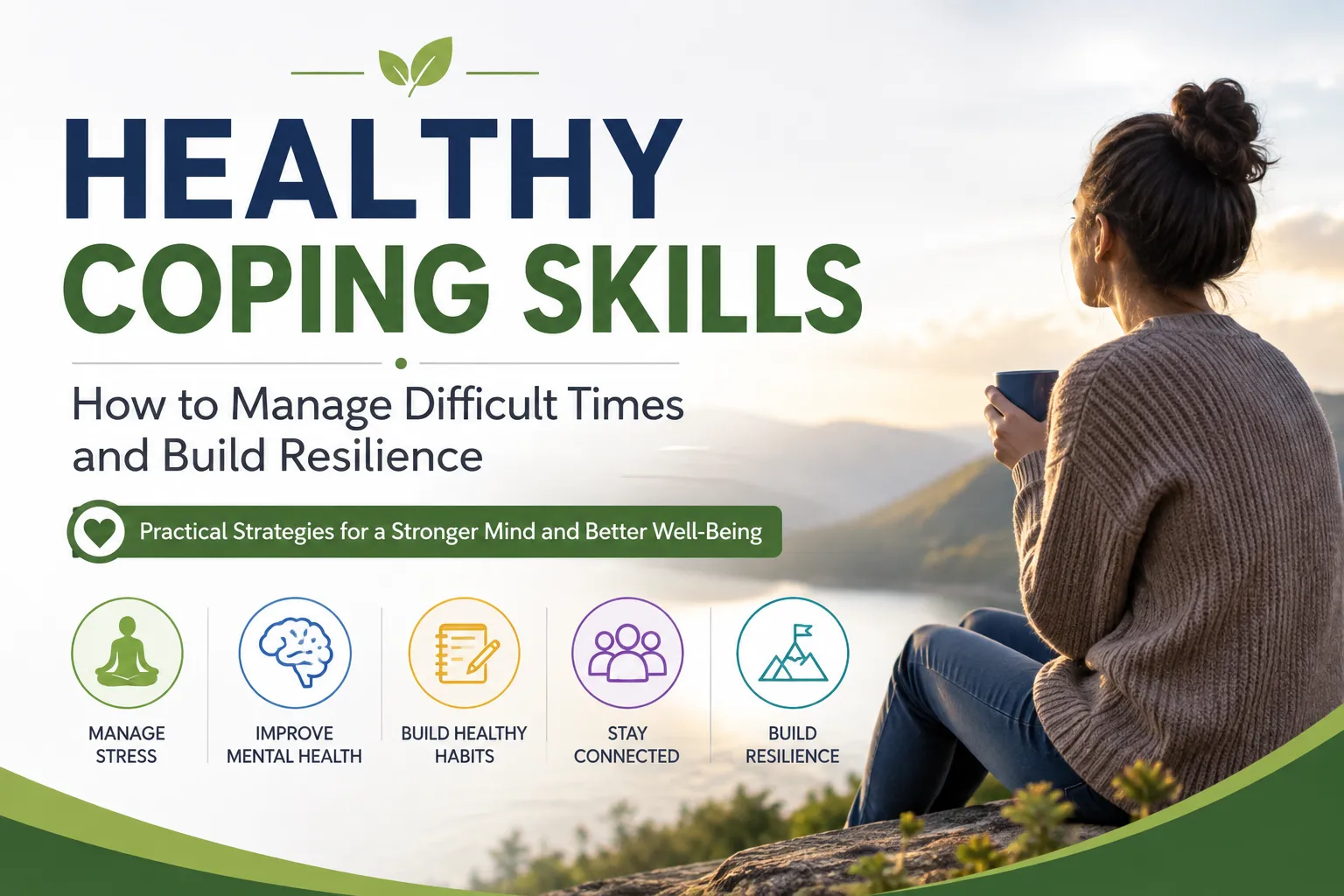
Difficult times are a normal part of life. How you feel and respond can be impacted by the stress of work, relationship issues, financial woes, loss and uncertainty. You can’t control all of the things that occur, but you can learn how to better manage these stressful situations and the emotions that are hard.
Enter healthy coping skills. They assist you in coping with difficulties, processing feelings and safeguarding your general well-being, while boosting your self-confidence to deal with future difficulties.
What are Coping Skills and Why Do They Matter?
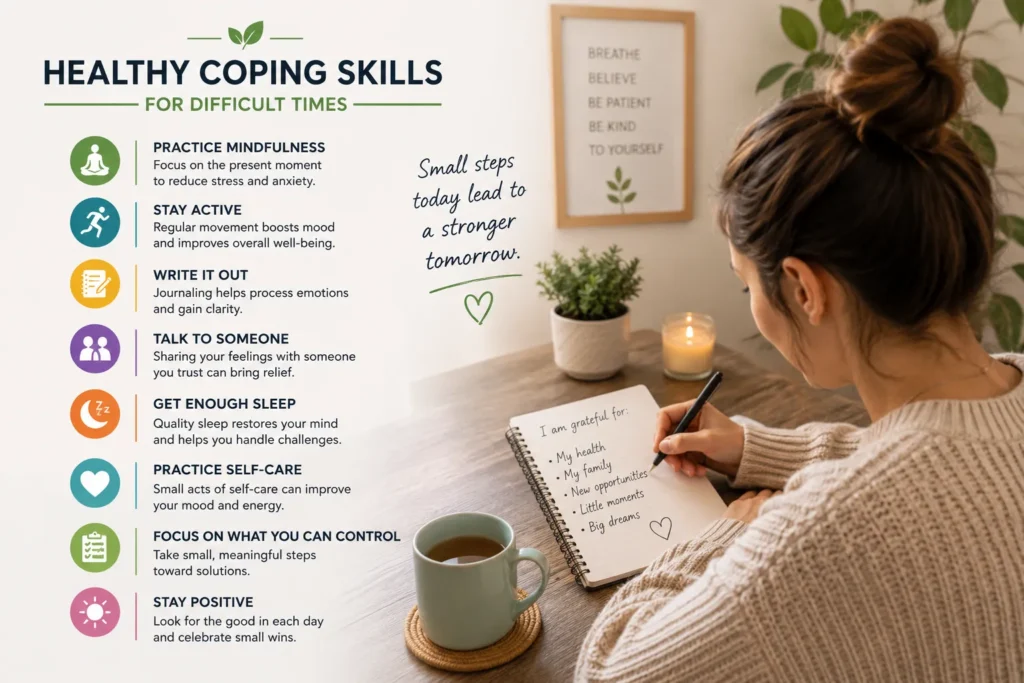
But, what are coping skills? They are the thoughts, behaviors and activities employed to cope with stress or less pleasant emotions. Any of these will work, such as talking to someone you know and trust, going for a walk, getting more sleep, writing it out, or dividing up a difficult task into smaller ones.
There may be some strategies that help relieve the pain in the short term but cause issues in the future. By avoiding responsibility, isolating or by indulging in healthy coping mechanisms stress can be harder to control. Finding ways to cope in a healthy manner will make you feel better not only in the moment but also help you stay healthy over the long-term.
What Coping Strategies Can Help During Difficult Times?
Coping is dependent upon the situation. If you’re in a position to make a problem change, concentrate on what you can do. This may involve planning, arranging tasks, establishing limits and/or seeking assistance.
If you don’t have time to change the situation, then concentrate on managing your emotions. Deep breathing, mindfulness, exercise, journaling, music and talking with someone can be helpful to help process what you are feeling.
Here are some of these adaptive coping strategies that are most effective when they become a pattern that you use on a regular basis as opposed to trying them only when you are feeling overwhelmed.
How Can You Start Developing and Building Coping Skills?
The first step to developing coping skills is to know what your typical response to stress is. Do you avoid the problem, overthink, be frustrated or withdrawn? Identifying your patterns will enable you to select a healthier reaction.
Experiment with a variety of positive coping strategies, and observe which ones are helpful. Walking may help you to clear your head and talking to a friend may help you to work through your emotions.
Taking care of the basic needs is also a part of building coping skills. These healthy habits can make it easier to deal with daily hassles: getting a good night’s sleep, eating right, exercise, connecting with others and taking time to unwind.
Don’t make your mental health coping skills too complicated. Any good habit, no matter how small, is significant when it is done on a consistent basis.
How Do Healthy Coping Skills Build Resilience?
Healthy coping skills are ways to adapt when life doesn’t go as expected, and can help promote resilience. Resilience is not about not taking things personally or about not feeling upset or feeling unwell. It involves learning to get better, adapt and continue to progress.
If you are wondering how to develop resilience, start with manageable steps. Think about the things that you can do, keep friends around you, acknowledge things that are working well and don’t expect to do everything.
Every time you cope with a tough situation successfully using a positive or constructive coping pattern, you strengthen your confidence in being able to successfully cope with future problems.
When Should You Seek Professional Support?
While coping skills can be very helpful, sometimes more is necessary. If stress, anxiety, sadness or other challenging feelings last for a prolonged period of time or start to impact your life, work, relationships or sleep, you should consider talking with a qualified mental health professional.
Don’t be afraid to ask for assistance. It may be a significant aspect of cultivating healthier means of coping with what you’re experiencing.
Conclusion
But it’s not possible to avoid all bad moments, only to be better equipped to deal with them. Learning healthy coping skills, developing healthy routines and using adaptive responses and seeking support when necessary can help develop resilience over time.
Frequently Asked Questions
What are healthy coping skills?
Healthy coping skills are healthy ways to deal with stress and negative feelings such as exercise, journaling, relaxing, social support, healthy routines and professional assistance.
What are coping skills used for?
Coping skills are used to deal with stress, difficult feelings and challenging situations and to minimise the risk of using unhealthy coping skills.
What are some healthy coping mechanisms for stress?
Coping skills that are healthy are physical activity, breathing, sleeping, talking to a trusted person, writing in a journal, being mindful and taking breaks.
How can I start developing coping skills?
First, observe your reaction to stress, and then look at some of the basic techniques like walking, breathing, journaling, and talking to someone you know and trust.
What are adaptive coping strategies?
Adaptive coping is a positive behaviour that assists you to deal with problems in a way that doesn’t cause further issues. These include problem solving, communicating, regulating emotions and seeking support.
How do positive coping strategies help?
Positive coping strategies provide alternative healthy ways of reacting to stress and challenging emotions and enhance emotional health and everyday functioning.
Why are mental health coping skills important?
Mental health coping skills are practical skills that can be used to deal with emotional situations, regulate stress, solve problems, and identify situations where extra help may be required.
How can I build coping skills into my routine?
Pick one or two real-life habits that you will do, like going for a walk, writing in a journal, breathing with a friend or someone you trust, or doing something else that is healthy.
How do healthy coping skills build resilience?
Healthy coping skills are ways you can deal with difficult situations, regulate your emotions, learn from challenging situations and become more confident in your ability to meet future challenges.
How can I develop resilience?
Learning how to develop resilience is about building supporting relationships, focusing on what you can do, identifying your strengths, keeping healthy and taking things one step at a time.
