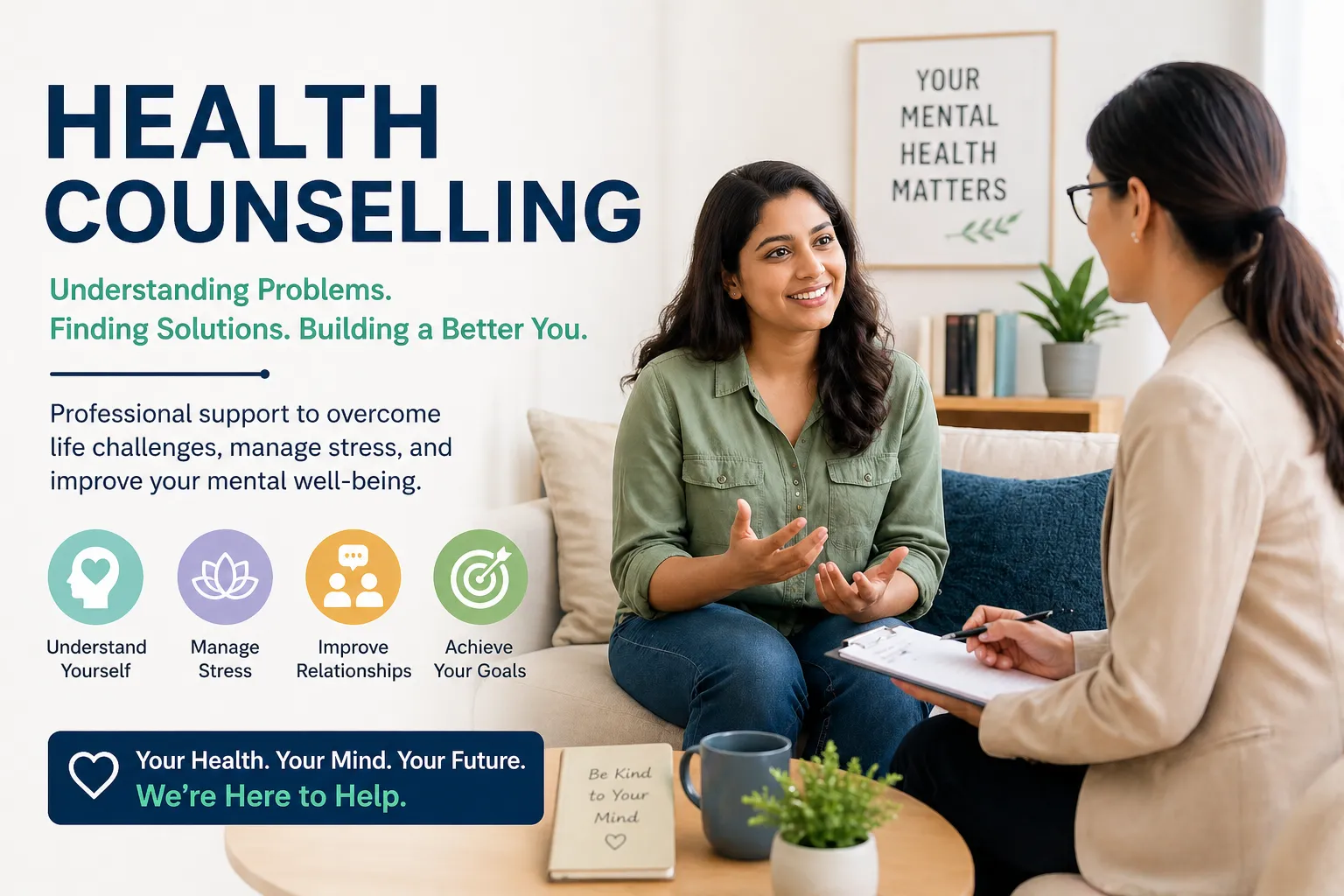
Health counselling plays a crucial role in helping individuals manage emotional, psychological, and lifestyle challenges. In today’s fast-paced world, many people struggle with stress, anxiety, relationship issues, and health-related concerns. These problems can affect daily life, productivity, and overall happiness. Health counselling offers structured, evidence-based solutions to help individuals understand their problems and take meaningful steps toward improvement.
This guide focuses on solving real-life problems through health counselling, explaining how it works, when to seek help, and how it can bring long-term positive change.
Understanding Health Counselling and Its Purpose
Health counselling is a professional service that supports individuals in improving their mental, emotional, and behavioral health. It combines psychological techniques, communication strategies, and lifestyle guidance to address a wide range of issues.
Unlike general advice from friends or family, health counselling is based on scientific methods and tailored approaches. Counsellors assess each individual’s situation and provide practical solutions that are realistic and achievable.
Common Problems Health Counselling Can Solve
Many people delay seeking help because they are unsure whether their issues are serious enough. In reality, health counselling addresses a variety of everyday challenges, including:
- Stress and burnout from work or studies
- Anxiety and constant worrying
- Depression or low mood
- Relationship conflicts
- Low self-esteem or lack of confidence
- Difficulty coping with life changes
These problems may seem small at first but can grow if ignored. Health counselling services helps identify the root cause and provides strategies to manage them effectively.
Signs You May Need Health Counselling
Recognizing the need for help is often the first step toward solving a problem. You should consider health counselling if you experience:
- Persistent stress or emotional exhaustion
- Trouble sleeping or changes in appetite
- Feeling overwhelmed by daily responsibilities
- Difficulty managing anger or emotions
- Loss of interest in activities you once enjoyed
Seeking help early can prevent these issues from becoming more severe and harder to manage.
How Health Counselling Provides Solutions
One of the most valuable aspects of health counselling is its problem-solving approach. Instead of just discussing issues, counsellors focus on actionable steps to improve well-being.
Identifying the Root Cause
Counsellors help you explore underlying factors contributing to your problems. This may include past experiences, current stressors, or unhealthy thought patterns.
Developing Coping Strategies
Health counselling teaches practical techniques such as stress management, emotional regulation, and mindfulness. These skills empower individuals to handle challenges independently.
Improving Communication Skills
Many problems arise from poor communication. Counsellors guide individuals on how to express themselves clearly and build healthier relationships.
Setting Realistic Goals
A structured plan with achievable goals helps individuals track progress and stay motivated. This approach ensures long-term improvement rather than temporary relief.
Types of Health Counselling Approaches
Different problems require different solutions. Health counselling includes various methods tailored to individual needs:
- Cognitive Behavioral Therapy (CBT) for managing negative thoughts
- Solution-focused counselling for goal-oriented progress
- Family counselling to resolve relationship conflicts
- Lifestyle counselling for improving habits and routines
Each approach is designed to address specific challenges while promoting overall well-being.
Benefits of Health Counselling
Health counselling offers both short-term relief and long-term benefits. Some key advantages include:
- Better stress management and emotional control
- Improved relationships and communication
- Increased self-awareness and confidence
- Enhanced decision-making skills
- Greater overall life satisfaction
These benefits contribute to a healthier and more balanced lifestyle.
Practical Tips to Support Counselling Outcomes
While counselling provides professional guidance, personal effort is equally important. Here are some steps to enhance results:
- Maintain a consistent routine
- Practice mindfulness or relaxation techniques
- Stay physically active
- Build a support network of trusted individuals
- Be open and honest during counselling sessions
Combining these habits with professional counselling can significantly improve outcomes.
When Should You Start Health Counselling?
Many people wait until problems become overwhelming before seeking help. However, health counselling is most effective when started early. If your challenges are affecting your daily life, relationships, or mental health, it is time to take action.
You can explore helpful guidance through Mental wellness support programs or learn more about professional help via Health counselling services to take the first step toward improvement.
Overcoming Stigma Around Counselling
One of the biggest barriers to seeking help is social stigma. Some individuals feel that asking for help is a sign of weakness. In reality, it is a proactive step toward self-improvement and personal growth.
Health counselling is not just for severe conditions; it is a valuable tool for anyone looking to improve their quality of life.
FAQs About Health Counselling
What is the main goal of health counselling?
The primary goal is to help individuals understand their problems and develop practical solutions to improve mental and emotional well-being.
How long does counselling take to show results?
Results vary depending on the individual and the issue, but many people notice improvements within a few sessions.
Is health counselling only for mental illness?
No, it is beneficial for anyone facing stress, life challenges, or personal development goals.
Can counselling be done online?
Yes, many professionals offer online sessions, making it more accessible and convenient.
Is everything discussed in counselling confidential?
Yes, confidentiality is a key principle, ensuring a safe and private environment for clients.
Final Thoughts
Health counselling is a powerful solution for managing life’s challenges and improving overall well-being. By addressing problems early, developing coping strategies, and seeking professional guidance, individuals can lead healthier, more fulfilling lives. Taking the first step toward counselling can be the beginning of lasting positive change.
